
Big Magic
How I wrote a novel in a month without meaning to.

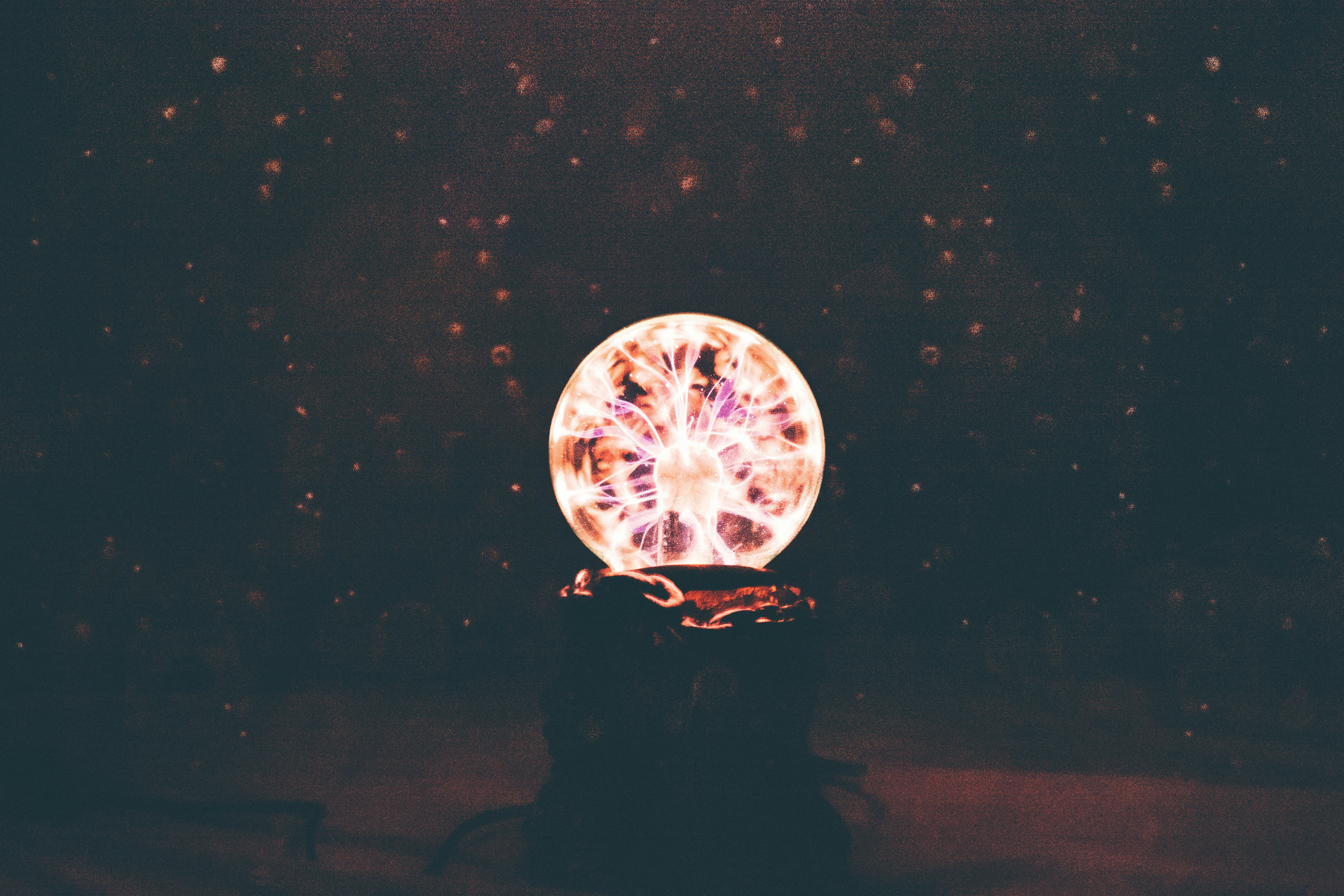
In the days leading up to Christmas, I bought myself a copy of Elizabeth Gilbert’s Big Magic.
I remembered the idea everyone talked about when it came out: that creative ideas travel through the ether, waiting for someone to catch them—and if you don’t, they simply move on, in search of someone who will.
There’s been an idea circling me, on and off, for more than two decades.
It first brushed up against me in my early twenties: the seed of two girls whose insecurities and protection mechanisms are so perfectly matched they can’t help but combust. Back then I thought it might make a good movie.
It returned in my early thirties, when I sat down and wrote about 10,000 words of it as a novel over one summer—thinking hard about where to place my small trio of characters, and how to create conditions where their lives could realistically intersect.
And then, in early December, it came back again—this time with a kind of insistence that felt physical. I wanted nothing more than to stay inside the feeling. So I did.
I chained myself to my desk for several weeks, shed every obligation I could, and wrote an entire first draft of a novel in less than a month.
If you had told me, before I did it, that someone drafted a novel that quickly, I would have assumed they weren’t serious about craft. That they thought books were something you could produce casually, rather than something you slowly wring out of the body.
But that isn’t true for me. I am serious about craft: about language, consistent character, and the slow, inevitable consequence of cause and effect. The difference is that this idea arrived at a moment when I was finally able to pick it up—because I’d already done years of background work in my head about character and place and structure, about how to turn something that began as a series of flashbacks and character studies into a story that unfolded in the present tense.
I’d already been living with these people. I knew the key plot points. I’d been studying three-act structures for another project I had been experimenting with—set up, build, knock it all down—so that when I sat down to write, the story didn’t feel invented so much as released. It poured out of my fingertips.
That is to say: I experienced “Big Magic.”
The book is called Live Beautiful, and writing it felt like being possessed in the best possible way.
I can’t tell you yet what happens—not really—but I can tell you what it’s about: two girls who want ferociously, and who’ve both learned that wanting is dangerous—one because it has already destroyed her, the other because she doesn’t believe she’s worthy of it. One feels unworthy because she doesn’t feel beautiful enough; the other because she’s stuck.
And I can tell you what the world feels like. It’s late adolescence without the movie lighting: not rooftop parties and endless freedom, but TV glow, long walks, borrowed cars, and parents in the background—present as a kind of gravity around every decision. They’re legally grown, but not independent. And even though it isn’t explicitly sexual on the surface, sex is in the subtext all the time: a charge in the room, a threat, a promise.
It’s set in Northern California with a smidge of New Jersey, and class is always in the room.
It’s about the small ways we end up hurting each other even when we don’t intend to—especially when we think we’re protecting ourselves.
It was a profound creative experience, unlike any I’ve had before.
I would wake up in the morning bounding around the kitchen, excited to get to work, even when what I had to write was desperately sad. I would go to bed with my body still buzzing with emotion and anticipation. I listened to the same songs on repeat all day, in an obsessive loop.
The evening I finished the draft, I cried on my way to the library to pick up and drop off books for my son, grieving for my characters.
On Christmas Eve, I cried for several hours—this time for myself.
I felt a renewed kinship with other kinds of artists: actors who step so fully into their characters that they can’t separate them from themselves, directors who move people around a stage, musicians who channel emotion like an electric charge.
Even now, a couple of weeks later, I feel newly charged—reawakened to emotion and possibility. I feel changed by the experience; if not permanently, then at least for now.
I’m editing now, and I’m planning to send a second draft to my agent(s) and a couple of close friends by the end of the month.
I’ll share more as this draft becomes a book. For now, I just wanted to say: I’m back in the room with my own life, and I’m glad you’re in it with me.
Thank you for being here while the magic is still warm.
Until next time,
Rachel
amazing stuff, yes!!!
Hell ya! Love this— when the muse works fast like this you know it’s meant to be. ✨